
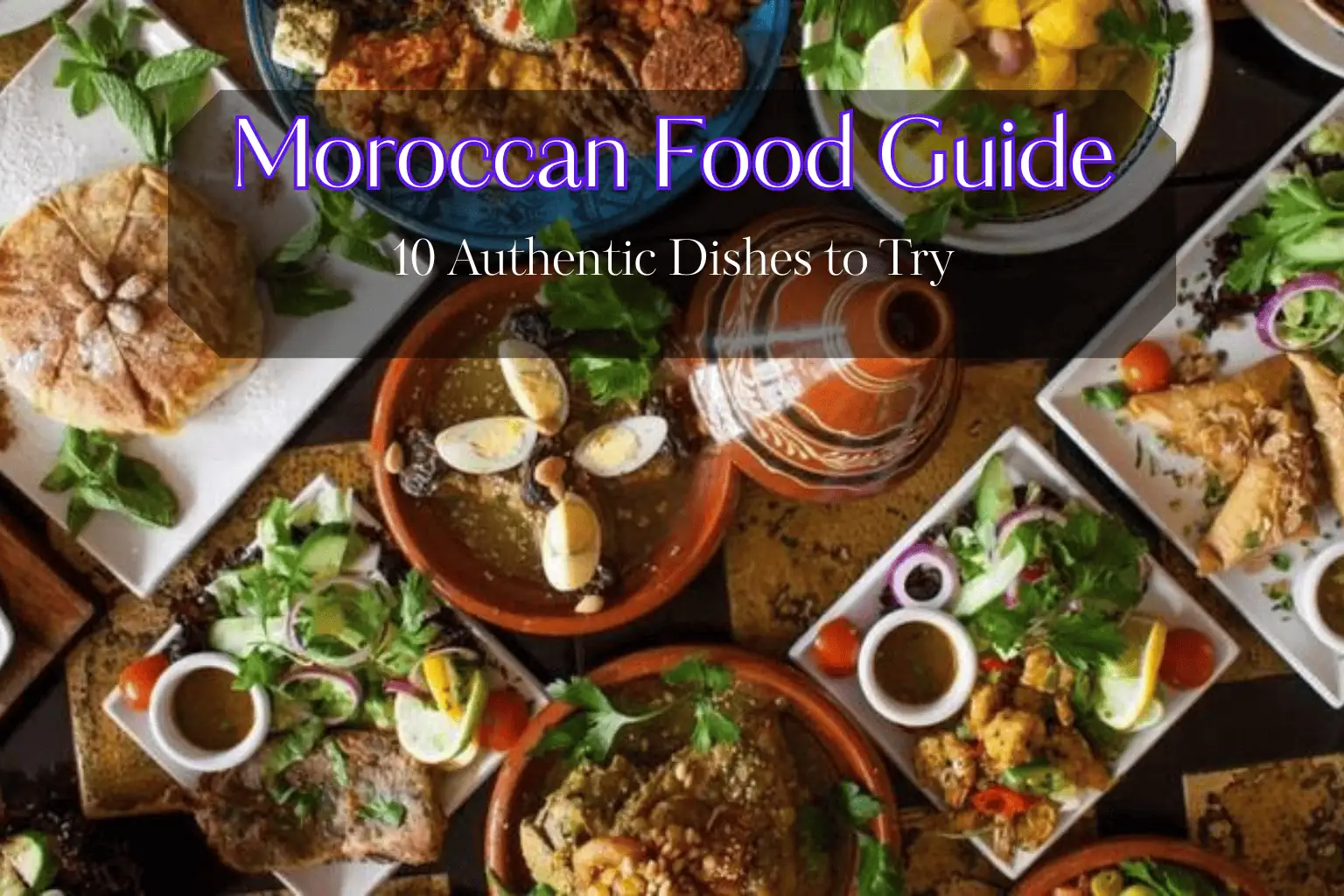
Moroccan Food Guide: 10 Authentic Dishes to Try
The moment you step into a Moroccan souk, your senses ignite. The air is thick with the heady perfume of cumin, cinnamon, and saffron—spices that have danced through North African kitchens for centuries. Steam rises from bubbling tagines tucked into glowing charcoal braziers. Vendors shout over sizzling grills where skewers of lamb kefta crackle. Sticky-sweet chebakia glisten under glass domes, while orange juice stalls overflow with pyramids of citrus, freshly squeezed before your eyes. This is not just food—it’s theatre, heritage, and hospitality rolled into one intoxicating Moroccan food experience.
Before I moved to Morocco, I thought I knew what Moroccan food was. I pictured tagines and couscous, maybe a mint tea or two.
But after years of living with my Moroccan partner, joining her family for Friday couscous rituals, taking food tours through the labyrinthine medinas of Fes and Marrakech, and learning to grind ras el hanout in a Berber kitchen in the Atlas Mountains, I realized I’d barely scratched the surface.
Now, I’m here to guide you—not just to the dishes you’ll find in guidebooks, but to the soul of Moroccan food.
You’ll discover what to eat in Morocco beyond the tourist menus, learn which famous Moroccan food dishes are truly worth seeking out, navigate Moroccan food street stalls like a local, and even how to manage dietary restrictions without missing out.
Whether you’re planning your first trip or returning for another taste, this guide will help you eat Moroccan food like you belong—because in Morocco, food isn’t just sustenance. It’s connection. It’s culture. It’s love served on a communal plate.
Understanding Moroccan Food: More Than Just Tagine
When you think of Moroccan food, the tagine might spring to mind—but that’s just the beginning. At its core, Moroccan food culture is built on generosity, patience, and an almost sacred reverence for ingredients. Meals are slow-cooked, often over hours or even days. Spices aren’t just added for heat—they’re layered for depth, complexity, and balance. And above all, Moroccan food is meant to be shared. You’ll rarely eat alone in Morocco; even a simple street snack is often passed around with smiles and stories.
A Melting Pot of Culinary Influences in Moroccan Food
Moroccan food is a living archive of conquests, trade routes, and migrations. The indigenous Berbers laid the foundation with their earthy stews and preserved lemons. Arab traders introduced spices like saffron and cinnamon. The Andalusian Moors brought sophistication in pastry and technique. Ottoman influences crept in via neighboring Algeria. The French left behind café culture and baguettes (yes, you’ll find them everywhere). And along the coast, Spanish flavors mingle with fresh Atlantic seafood.
This fusion doesn’t feel forced—it feels inevitable. Every bite of Moroccan food tells a story of adaptation and harmony.
Regional Variations: Morocco’s Moroccan Food Map
Morocco’s geography is as diverse as its flavors. In the coastal cities like Essaouira and Casablanca, expect seafood tagines, grilled sardines, and fish chermoula—all integral to coastal Moroccan food traditions. Head inland to Fes or Meknes, and you’ll find richer, spicier dishes—think pastilla layered with pigeon and almonds, or tanjia slow-cooked in urns buried in embers. In the High Atlas, Berber communities serve hearty barley soups, smoky bissara, and msemen cooked over open fires. Even the Sahara offers surprises: camel meat tagines, dates stuffed with almonds, and sweet mint tea brewed under starry skies.
Understanding these regional nuances transforms your Moroccan food journey from checklist to discovery.
The 10 Most Famous Moroccan Food Dishes You Must Try
Let’s dive into the heart of traditional Moroccan food. These are the dishes you’ll see on menus, smell in alleyways, and be invited to taste in homes across the country. Each one is a masterpiece of flavor, history, and technique.
1. Tagine: The Icon of Moroccan Food
No symbol defines Moroccan food more than the tagine—the conical clay pot and the slow-cooked stew within. Designed to trap steam and circulate moisture, the tagine tenderizes meats and infuses vegetables with layers of spice. It’s not just a dish; it’s a cooking method, a cultural artifact, and a communal Moroccan food experience.
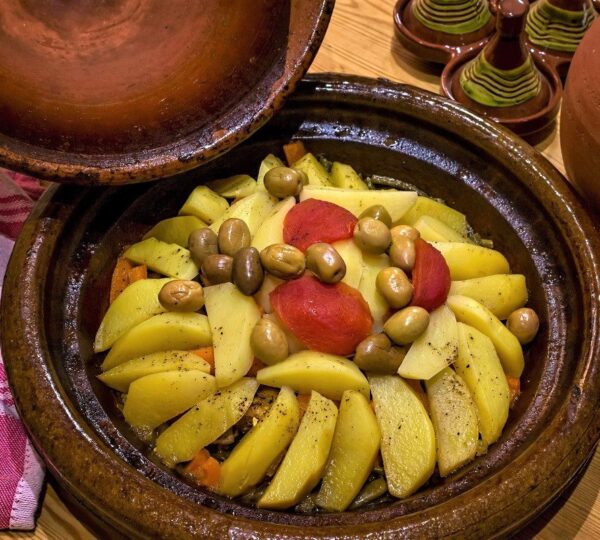
Common Varieties:
- Lamb with prunes and almonds (sweet-savory perfection)
- Chicken with preserved lemons and green olives (tangy, briny, unforgettable)
- Vegetable tagine with seasonal produce (eggplant, carrots, zucchini, chickpeas)
Dietary Info: GF (if not thickened with flour), Veg options available, V options rare (often cooked with meat stock)
Local’s Tip: “The sauce is the soul of the tagine—let it cool slightly before scooping with bread. And never ask for a fork; use your right hand or tear off pieces of khobz (Moroccan bread) to soak up every drop.”
2. Couscous: The Friday Tradition in Moroccan Food
Often called Morocco’s national dish, Moroccan food couscous is more than just steamed semolina—it’s a ritual. Traditionally prepared on Fridays (the holy day), families gather around a communal platter piled high with fluffy grains, stewed vegetables, and tender meat (usually lamb or chicken). The couscous is painstakingly steamed multiple times over a simmering broth, resulting in light, separate grains that absorb flavor without turning mushy.
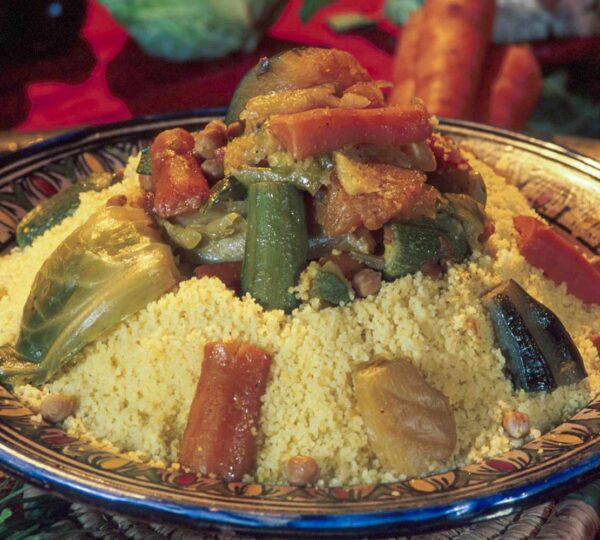
Common Varieties:
- Seven-vegetable couscous (carrots, turnips, zucchini, pumpkin, tomatoes, chickpeas, onions)
- Couscous tfaya (topped with caramelized onions and raisins)
- Fish couscous (coastal specialty)
Dietary Info: Not GF (semolina is wheat-based), Veg options common, V rare (broth often contains meat)
Local’s Tip: “If you’re invited to a Moroccan home for Friday couscous, accept! It’s the highest form of hospitality. And don’t be shy—eat with your hands from the section in front of you.”
3. Pastilla (or B’stilla): Sweet & Savoury Pie in Moroccan Food
A masterpiece of Andalusian influence, Moroccan food pastilla is a flaky, golden pie that dances between sweet and savory. Traditionally made with pigeon (now often chicken), it’s layered with almonds, cinnamon, and powdered sugar, all wrapped in warqa (paper-thin pastry similar to phyllo). The first bite is a revelation: crispy, meaty, nutty, and just sweet enough to surprise.
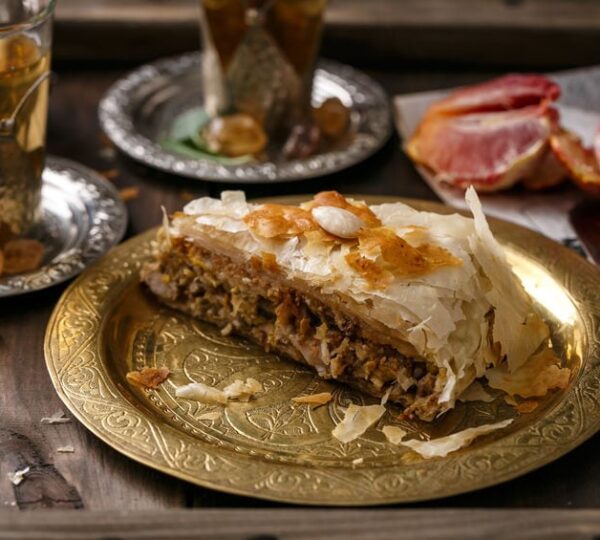
Common Variaries:
- Chicken pastilla (most common for tourists)
- Seafood pastilla (coastal innovation)
- Vegetarian pastilla (modern adaptation with mushrooms or spinach)
Dietary Info: Not GF, Not V, Veg options emerging
Local’s Tip: “Look for pastilla in Fes—it’s considered the birthplace of the dish. And don’t be alarmed by the sugar on top; it’s supposed to be there!”
4. Harira: The Hearty Moroccan Food Soup
This rich, tomato-based soup is Moroccan food comfort food—especially during Ramadan, when it breaks the daily fast. Packed with lentils, chickpeas, lamb, tomatoes, and fragrant herbs like cilantro and parsley, harira is thick, nourishing, and deeply spiced with ginger, turmeric, and sometimes a touch of chili. It’s often served with dates and chebakia for a full iftar (breaking of the fast) experience.
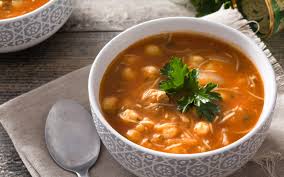
Dietary Info: GF (if no pasta added), Veg options available (skip the meat), V possible (ensure no meat stock)
Local’s Tip: “During Ramadan, accept any invitation to share harira—it’s a sacred moment of community. And yes, it’s perfectly acceptable to slurp!”
5. Msemen: Flaky Fried Moroccan Food Bread
Think of msemen as Morocco’s answer to paratha or puff pastry. These square, layered flatbreads are pan-fried until crisp and golden, then served with honey, amlou (almond butter), or soft cheese. Street vendors flip them with practiced flicks of the wrist, their surfaces glistening with butter or oil.
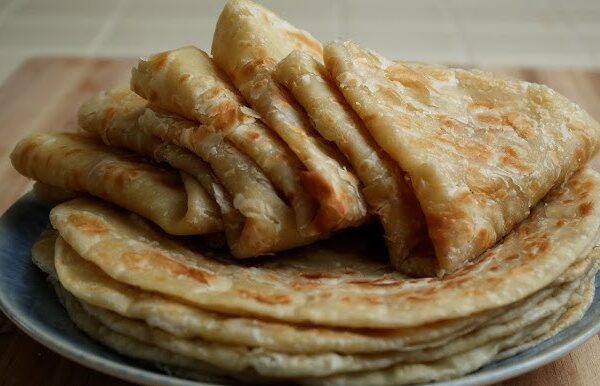
Common Pairings:
- With mint tea for breakfast
- Stuffed with keema (spiced minced meat) for a savory snack
- Dipped in olive oil and sprinkled with sugar
Dietary Info: Not GF, Veg (if no meat stuffing), V (if no dairy in preparation—ask!)
Local’s Tip: “Best eaten fresh off the griddle. If it’s sitting under a heat lamp, keep walking.”
6. Zaalouk: Smoked Eggplant & Moroccan Food Salad
This humble salad is a staple in Moroccan food homes—a smoky, garlicky mash of roasted eggplant and tomatoes, seasoned with cumin, paprika, and fresh herbs. Served cold or at room temperature, it’s often part of a spread of small dishes (similar to mezze) alongside olives, pickled lemons, and fresh bread.
Dietary Info: GF, Veg, V
Local’s Tip: “Zaalouk tastes even better the next day—flavors deepen as it sits. Ask for it as part of a ‘salade marocaine’ platter.”
7. Kefta: Grilled Meatballs, Often in a Moroccan Food Tagine
Kefta are spiced ground meatballs—usually lamb or beef—mixed with parsley, onion, cumin, and paprika. They’re grilled on skewers or simmered in tomato sauce inside a tagine, sometimes with eggs cracked on top (kefta mkaouara). Simple, satisfying, and bursting with flavor in Moroccan food kitchens.
Dietary Info: GF (if sauce isn’t thickened), Not Veg, Not V
Local’s Tip: “Street kefta grilled over charcoal is unbeatable. Watch for the smoke—it means flavor.”
8. Tanjia: Marrakech’s Slow-Cooked Moroccan Food Stew
Exclusive to Marrakech, tanjia is the bachelor’s dish—traditionally prepared by men for Friday gatherings. Lamb (sometimes beef) is marinated in cumin, garlic, saffron, and preserved lemons, then sealed in an urn-shaped clay pot and slow-cooked for hours in the embers of a hammam (public bath) furnace. The result? Fall-apart tender meat in a fragrant, citrusy broth—a true Moroccan food treasure.
Dietary Info: GF, Not Veg, Not V
Local’s Tip: “Ask your riad to arrange a tanjia—it’s rarely on restaurant menus. Worth the effort.”
9. Bissara: Fava Bean Moroccan Food Soup
A humble yet beloved breakfast or street food, bissara is a thick, creamy soup made from dried fava beans, garlic, cumin, and olive oil. Topped with a swirl of oil and a sprinkle of paprika, it’s warming, earthy, and deeply satisfying—especially on chilly mornings.
Dietary Info: GF, Veg, V
Local’s Tip: “Eat it with fresh khobz, tearing off pieces to scoop. Add extra cumin and chili if you like heat.”
10. Chebakia: Honey-Sesame Moroccan Food Pastries
No Moroccan celebration is complete without chebakia—flower-shaped pastries deep-fried, dipped in orange blossom honey, and coated in sesame seeds. Crispy, sticky, floral, and addictive, they’re especially abundant during Ramadan but available year-round.
Dietary Info: Not GF, Veg, V (check for butter vs. oil)
Local’s Tip: “They keep for weeks—perfect for gifting or snacking on long train rides.”
Street Moroccan Food Adventures: What to Eat and What to Avoid
Moroccan food street culture is where the country’s culinary soul truly shines. Forget sterile restaurants—here, food is cooked in alleyways, sold from carts, and devoured standing up. But to enjoy it safely, you need a local’s mindset.
Must-Try Street Foods:
- Grilled Sardines (Essaouira): Fresh off the boat, marinated in chermoula, and charred over open flames. Eat with lemon and bread.
- Maakouda: Crispy potato fritters, often sandwiched in bread with harissa and veggies. Morocco’s answer to the potato croquette.
- Sfenj: Light, airy doughnuts, best eaten hot and dusted with sugar. A breakfast staple.
- Babbouche (Snail Soup): A Marrakech specialty. Spiced broth with tender snails—slurp them from tiny tongs. Adventurous but delicious.
- Camel Burgers (Cafe Clock, Fes/Marrakech): Yes, really. Lean, slightly sweet meat, often served with slaw and fries. Sustainable and surprisingly tasty.
Crucial Safety Tips:
| ✅ Tip | Explanation |
|---|---|
| Follow the Locals | If a stall has a line of Moroccans, it’s fresh and safe. Tourist-only spots? Risky. |
| Fresh is Best | Watch your food being cooked. Sizzling grills = safe grills. |
| Check the Oil | Dark, murky oil? Walk away. Golden and clean? Dig in. |
| Be Wary of Water | Avoid fresh juices diluted with tap water. Stick to bottled or freshly squeezed in front of you. |
Essential Moroccan Food Drinks: From Mint Tea to Fresh Juices
No guide to Moroccan food is complete without drinks. Here’s what to sip:
- Moroccan Mint Tea (“Berber Whiskey”): Green tea + fresh mint + heaps of sugar, poured from a height to aerate and cool. Symbol of welcome. Refusing it is rude!
- Fresh Orange Juice: Morocco grows some of the world’s sweetest oranges. Stalls in Jemaa el-Fna serve glasses for pennies.
- Nous Nous: “Half-half”—equal parts coffee and hot milk. Creamy, comforting, perfect with msemen.
- Avocado Smoothies & Pomegranate Juice: Thick, rich, and revitalizing in the heat.
Alcohol Note: Available in licensed hotels, upscale restaurants, and Carrefour supermarkets. Expensive and not part of daily culture—but legal.
Navigating Moroccan Food with Dietary Restrictions
For Vegetarians and Vegans:
Many dishes are veg-friendly, but “vegan” isn’t a common concept in Moroccan food culture. Be specific when ordering:
“La lahme, la djaj, la samak, la beyd, la hlib, la jben.” (No meat, chicken, fish, eggs, milk, cheese.)
Safe Bets:
- Vegetable tagine
- Zaalouk, bissara, loubia (white bean stew)
- Salads (taktouka, beetroot, carrot)
- Msemen (confirm no butter)
- Fresh fruit and juices
For Gluten-Free Travellers:
Challenging, as bread is central to Moroccan food culture. But options exist:
Safe Bets:
- Tagines (ask: “mazalou?”—is it thickened with flour?)
- Tanjia, kefta (grilled)
- Bissara, harira (no pasta)
- Grilled meats and fish
- Fresh salads and cooked veggies
Always communicate clearly. Learn: “Ana mrid b’ss’ghira.” (I’m sick from wheat.)
Conclusion: Your Moroccan Food Culinary Adventure Awaits
From the first sip of mint tea poured from an arm’s length away to the last sticky bite of chebakia under a lantern-lit sky, Moroccan food is an invitation—to slow down, to savor, to connect. You’ve now got the roadmap: seek out famous Moroccan food dishes like tagine and couscous, brave Moroccan street food with local wisdom, sip like a Berber, and navigate dietary needs with confidence.
This isn’t just about what to eat in Morocco—it’s about how to eat Moroccan food: with your hands, with gratitude, with joy.
Now it’s your turn: What’s the first authentic Moroccan food meal you’re excited to try? Share your dream dish in the comments below!
👉 Hungry for more? Check out our guides: “Best Restaurants in Marrakech” and “7-Day Morocco Itinerary for Food Lovers.”
FAQ Section: Quick Answers to Common Questions
What is the national dish of Morocco?
Couscous is widely considered Morocco’s national dish, traditionally served on Fridays with family.
Is it safe to eat street food in Morocco?
Yes—with caution. Eat where locals eat, choose freshly cooked items, and avoid questionable water or oil.
Can you drink alcohol in Morocco?
Yes, but it’s not part of mainstream culture. Find it in licensed hotels, restaurants, and supermarkets—expect higher prices.
What do Moroccans eat for breakfast?
Typical breakfast includes msemen or batbout bread with honey, amlou, or olive oil, plus bissara soup, fresh juices, and mint tea.

