
Tbourida Morocco 2025: Ride With Legends, Fire With Unity
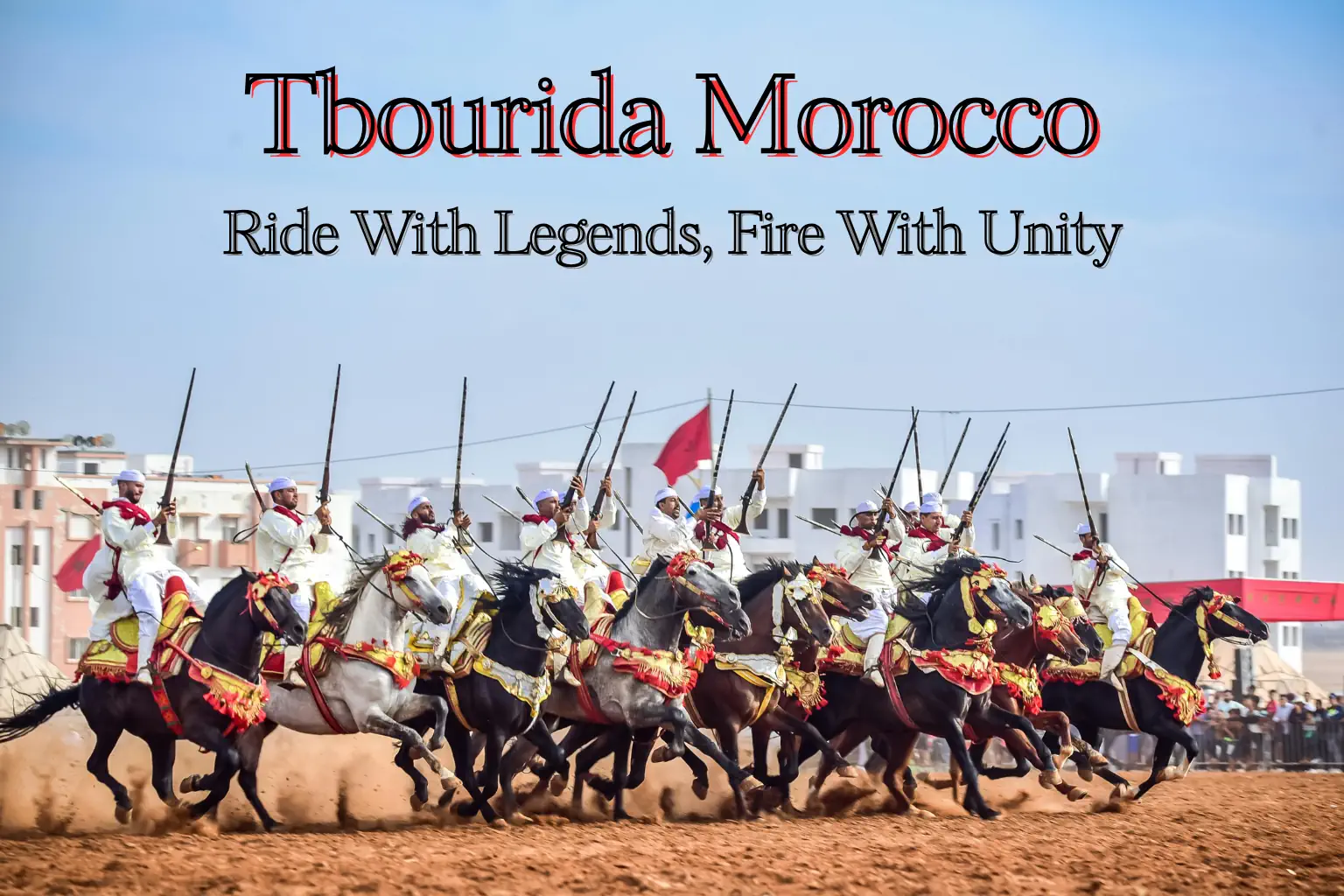
Imagine the ground trembling beneath you—not from an earthquake, but from the synchronized thunder of hooves. A cloud of dust swirls as riders in flowing white djellabas and vibrant sashes surge forward like a single living wave. The scent of gunpowder lingers in the air, sharp and ancient. Then—CRACK!—a single, deafening gunshot rings out, not from one rifle, but from twenty, fired in flawless unison. This is Tbourida Morocco, a spectacle that doesn’t just dazzle the eyes—it stirs the soul.
Often called “Fantasia” by outsiders, the authentic name is Tbourida, derived from baroud—Arabic for “gunpowder.” To call it merely a show is to miss its essence. This is living history, a martial ballet born from the battlefields of Berber and Arab cavalry, now preserved as a sacred cultural ritual. In 2021, UNESCO enshrined Tbourida Morocco on its Representative List of the Intangible Cultural Heritage of Humanity—a global recognition of its profound cultural value.
Whether you’re a history buff, an equestrian enthusiast, a cultural traveler, or simply someone seeking the heartbeat of Morocco, this guide is your definitive companion. From the origins of the Barb horse Morocco to the rise of Tbourida riders breaking gender norms, from the rhythm of the Moussem festival Morocco to tips on witnessing the Moroccan Fantasia Festival firsthand—we’ve got you covered.
2. What is Tbourida Morocco? Unpacking Morocco’s Legendary Equestrian Art
At its core, Tbourida Morocco is a traditional equestrian performance that reenacts historical cavalry charges. It’s not a race. It’s not a stunt show. It’s a disciplined, poetic display of unity, courage, and precision. A troupe—called a sorba—of 15 to 25 riders gallops side by side in perfect formation before simultaneously firing their antique rifles, the moukahla, into the sky. The louder and more unified the shot, the greater the triumph.
The Sorba (The Troupe)
Every sorba is led by the Mokaddem, the captain who dictates the pace, timing, and spirit of the charge. The number of riders is traditionally odd—15, 17, 21, or 25—symbolizing balance and harmony in Moroccan numerology. These riders aren’t performers; they’re custodians of a legacy, often representing their tribe, village, or region. Their bond isn’t just with their horses—it’s with each other, forged through years of training and shared heritage.
The Harka (The Salute)
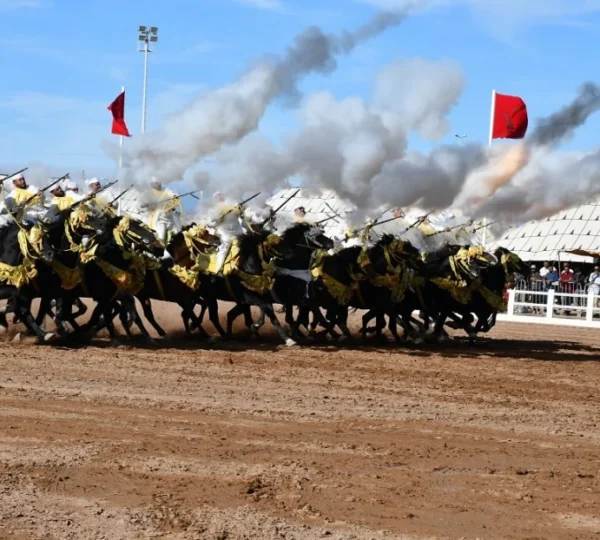
Before the thunderous charge comes the Harka—a ceremonial trot onto the field, or mahrak. Riders enter with grace, standing in their stirrups, rifles held aloft, performing synchronized salutes that showcase their control and artistry. It’s a moment of reverence, a bow to tradition before the storm.
The Talqa (The Charge)
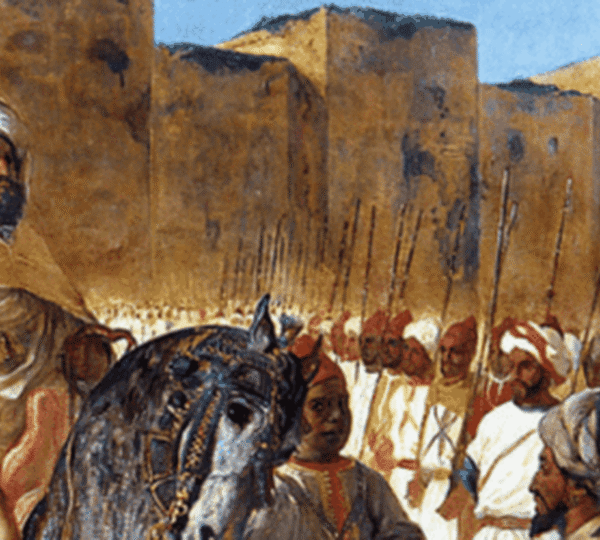
Then comes the Talqa—the gallop. At the Mokaddem’s signal, the riders surge forward in a perfectly straight line, hooves pounding in unison, bodies leaning slightly forward, arms outstretched. The spacing between horses must remain exact—no gaps, no overlaps. It’s a test of trust, timing, and training. One misstep can break the spell.

The Baroud (The Gunpowder Shot)
The climax—the Baroud. At precisely the right moment, every rider fires their moukahla skyward. The goal? One sound. One crack. One heartbeat. Judges don’t time the speed—they listen for unity. If you hear multiple shots, the troupe has failed. If you hear a single, earth-shaking BOOM, they’ve achieved perfection. This moment—this Baroud—is why Tbourida Morocco endures. It’s not about destruction. It’s about harmony.

3. The Rich History & Symbolism of Tbourida Morocco: From Warrior Past to Cultural Pride
Tbourida Morocco didn’t emerge from a stage—it was born on the battlefield. Its roots stretch back over a thousand years to the Berber cavalry of North Africa and the Arab horsemen who swept across the Maghreb. These warriors used coordinated cavalry charges to overwhelm enemies—galloping in tight formation, then firing volleys to create shock and awe.
Over time, as warfare evolved, so did Tbourida Morocco. It transitioned from military drill to ceremonial art, performed at weddings, religious festivals, and royal celebrations. Yet, it never lost its warrior soul.
Honour, Status, and Masculinity
In traditional Moroccan society, mastering Tbourida Morocco was a rite of passage for men. It signaled bravery, discipline, and social standing. A skilled rider brought honour to his family and tribe. The horse wasn’t just transportation—it was status. To own and train a Barb horse for Tbourida Morocco was to wear a crown of respect.
The Sacred Bond with the Horse
In Islamic and Berber cultures, the horse is more than an animal—it’s a symbol of nobility, divine blessing, and spiritual purity. The Prophet Muhammad himself praised the horse, and Berber legends speak of stallions carrying saints and warriors to glory. In Tbourida Morocco, the horse is a partner, not a prop. The calm, intelligent Barb horse Morocco breed is chosen not just for speed, but for temperament—able to withstand the chaos of gunfire and crowd without flinching.
Unity and Community
Tbourida Morocco is never a solo act. It’s a chorus. The synchronized charge represents the strength of the collective—the tribe, the village, the nation. In a country as diverse as Morocco, where dialects, customs, and landscapes shift from valley to valley, Tbourida remains a unifying thread. It says: We move as one. We fire as one. We are Morocco.
4. The Stars of the Show: The Riders, Horses, and Their Magnificent Attire
No performance of Tbourida Morocco would be complete without its living icons: the riders, their horses, and the dazzling regalia that turns each show into a moving museum of Moroccan craftsmanship.
The Barb Horse: Morocco’s Living Legend
The Barb horse Morocco, also known as the Berber horse, is the undisputed star. Smaller than European breeds but infinitely more resilient, the Barb is famed for its stamina, agility, and uncanny calm under pressure. These horses can gallop for miles, pivot on a dime, and stand steady as gunfire erupts around them.
Their tack is equally legendary. Saddles are hand-tooled leather, often passed down for generations. Bridles and harnesses shimmer with silver embroidery, beads, and tassels—each piece a family heirloom, telling stories of victories past. At major Moroccan Fantasia Festival events, you’ll see horses adorned like kings, draped in velvet, silk, and metallic thread.
The Riders’ Attire: Poetry in Motion
Riders wear the traditional djellaba—a long, hooded robe—usually in white to symbolize purity, though regional variations add splashes of saffron, indigo, or crimson. Around their waists, colourful sashes hold their rifles and add flair to their movements. Turbans, often matching the sash, crown their heads, while leather boots complete the ensemble.
Each costume reflects the rider’s origin. A troupe from the Atlas Mountains might wear earthy tones and woolen accents, while coastal riders from El Jadida dazzle in blues and silvers. It’s a walking map of Morocco’s cultural tapestry.
The Moukahla: Art in Arms
The moukahla—the long-barreled musket used in —is a masterpiece of artisanry. Often over a century old, these rifles are hand-forged, inlaid with silver, engraved with Quranic verses or tribal motifs. They fire only blank charges, but their weight, balance, and history make them sacred objects. To hold a moukahla is to hold the spirit of ancestors.
5. Tbourida Morocco Today: Tradition Meets the 21st Century
Tbourida Morocco is not frozen in time. It breathes, evolves, and surprises. In recent years, the most thrilling evolution has been the rise of female riders—shattering centuries of male dominance and adding a powerful new chapter to this ancient art.
The Rise of Female Riders
Meet Amal. A young woman from the plains near Meknes, she was gifted a Barb horse by her fiancé—not as a romantic gesture, but as a challenge. “Ride with me,” he said. And she did. Today, Amal leads one of Morocco’s pioneering all-female sorbas, competing in national festivals and drawing crowds who cheer not just for skill, but for revolution.
These women train just as hard, ride just as fearlessly, and fire just as precisely. Their presence at the Moroccan Fantasia Festival isn’t a novelty—it’s a statement. And Morocco is listening.
A Competitive National Sport
Gone are the days of informal village contests. Today, Tbourida Morocco is governed by the Fédération Royale Marocaine des Sports Équestres (FRMSE), with official rules, national championships, and televised finals. Judges score troupes on formation, timing, rifle synchronization, and rider posture. Prizes include cash, trophies, and—most coveted—honour.
The Société Royale d’Encouragement du Cheval (SOREC) plays a vital role, organizing events, preserving bloodlines of the fantasia horses, and promoting equestrian culture nationwide. Their annual festivals draw thousands, blending sport, spectacle, and deep cultural pride.
UNESCO World Recognition
In December 2021, Tbourida Morocco received its highest honour: inscription on UNESCO’s Representative List of the Intangible Cultural Heritage of Humanity. The designation wasn’t just for the performance—it recognized the entire ecosystem: the craftsmanship of the moukahla, the breeding of the Barb horse Morocco, the oral traditions, the community bonds.
As UNESCO states: “Tbourida Morocco is a social tradition that brings together riders, horse breeders, craftspeople, and spectators… It strengthens social cohesion and transmits values of solidarity, courage, and mutual aid.”
You can read the full inscription here .
6. A Traveller’s Guide: How to Witness a Fantasia Festival
Want to experience Tbourida Morocco in its purest, most electrifying form? Skip the staged shows (for now) and head to a Moussem—a traditional Moroccan festival honoring a local saint, harvest, or historical figure. Here, Tbourida Morocco isn’t entertainment. It’s devotion.
Featured Festivals: Where & When to Go
| 🎉 Featured Festivals | 📍 Location | 🗓️ Typical Timing |
|---|---|---|
| Moussem of Moulay Abdallah | El Jadida | August |
| Moussem of Tan-Tan | Tan-Tan (Southern Morocco) | May-June |
| Cherry Festival | Sefrou (Middle Atlas) | June |
| National Festival of Popular Arts | Marrakech | July |
These festivals offer more than Tbourida Morocco—you’ll find folk music, artisan markets, traditional dances, and feasts. But the fantasia horse show remains the crown jewel.
Staged Performances: For the Time-Crunched Traveler
If you’re short on time, the Chez Ali dinner show in Marrakech offers a condensed, tourist-friendly version of Tbourida Morocco. While less authentic, it’s still thrilling—and paired with a feast under the stars, it’s a memorable evening. Tickets range from $30–$100 USD.
Spectator Etiquette and Safety
Safety First
- Stay behind designated barriers. Horses can weigh over 1,000 pounds and move at 30+ mph.
- Wear ear protection. The Baroud is LOUD.
- Never approach horses without permission. Sudden movements can spook even the calmest fantasia horses.
Photography Tips
- Ask before taking close-ups of riders. Many are happy to pose—especially if you compliment their horse!
- Use burst mode to capture the gallop. The Baroud moment is fleeting—be ready.
Cultural Respect
- Dress modestly, especially at religious Moussems. Shoulders and knees covered.
- Remove shoes if entering sacred tents or spaces.
- Applaud generously. A loud cheer after the Baroud is the highest compliment.
7. Tbourida Morocco Frequently Asked Questions (FAQ)
Q1: What is the main goal of Fantasia?
A: The goal is perfect synchronization—of the gallop, the spacing, and especially the final rifle volley. It’s not about speed or flash. It’s about unity. One sound. One soul.
Q2: Is Tbourida Morocco dangerous?
A: Like any equestrian sport involving galloping horses and gunfire, there are risks. But riders train for years, horses are meticulously conditioned, and safety zones protect spectators. Serious injuries are extremely rare.
Q3: Are the guns in Tbourida Morocco real?
A: Yes. The moukahla are real, antique muskets—but they fire only blank charges (gunpowder without bullets). The sound and smoke are authentic; the danger is controlled.
Q4: How much does it cost to see a Tbourida Morocco show?
A: At local Moussems, it’s often free! You’re a guest of the community. Tourist shows like Chez Ali charge $30–$100. National competitions may have small entry fees (50–100 MAD).
Q5: Can women participate in Tbourida Morocco?
A: Absolutely! While historically male-dominated, all-female troupes now compete nationwide. Their presence is celebrated as a sign of progress and cultural vitality.
8. Conclusion: The Enduring Legacy of an Equestrian Masterpiece
Tbourida Morocco is more than a performance. It’s a living archive. A thunderous poem. A declaration of identity. In the synchronized gallop of the Tbourida riders, in the calm eyes of the Barb horse Morocco, in the unified crack of the Baroud, you witness the soul of a nation—proud, disciplined, and fiercely alive.
It’s a tradition that honors the past while galloping boldly into the future. Where women now ride beside men. Where ancient rifles fire in harmony with modern cameras. Where UNESCO recognition meets village pride.
So don’t just read about it. Experience it.
Feel the ground shake. Smell the gunpowder. Hear that single, perfect shot ring across the Moroccan sky.
Ready to experience Tbourida Morocco? Let Moroccan Soul Journeys craft a personalized itinerary that includes an authentic Moroccan Fantasia Festival, private meet-and-greets with riders, and behind-the-scenes access to horse stables and artisan workshops.
👉 Contact us today—and let the thunder of hooves lead you deeper into the heart of Morocco.

